
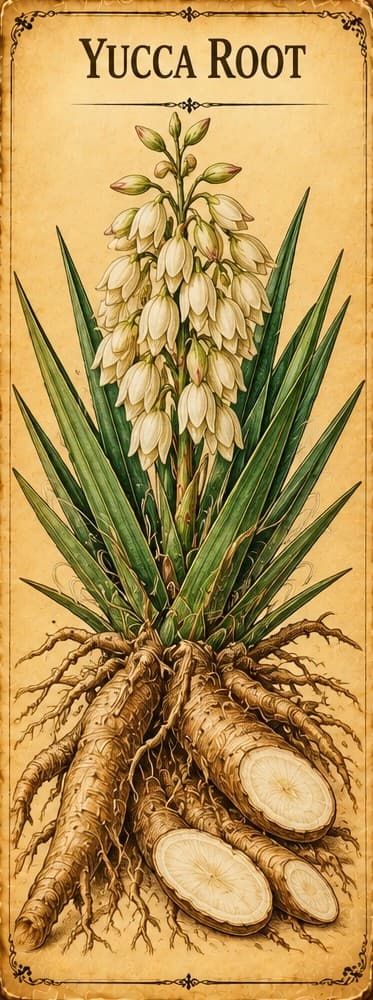
Yucca Root
Yucca schidigera
A desert plant of the southwestern US and northern Mexico, used by Native Americans for arthritis. It's rich in soapy compounds called saponins and is approved as a food additive in the US, but evidence for arthritis is weak.
Safety at a glance
- PregnancyNothing recorded
- BreastfeedingNothing recorded
- MedicinesNothing recorded
- Who should avoid itNothing recorded
- AllergiesNothing recorded
- ToxicityNothing recorded
Tap a box to read the safety notes below. “Nothing recorded” means our sources don't cover it, not that it's safe.
What is Yucca Root?
- Plant family
- Asparagaceae, the asparagus family
- Parts used
- The plant, as a powder or extract; tablets of whole-plant powder are sold as supplements
- Where it grows
- The deserts of the southwestern United States and northern Mexico
- Genus
- Yucca
- Species
- schidigera
Also called
Mojave Yucca, Yucca
Traditionally used for
- Arthritis (traditional)
- Food additive
Traditionally described as
- May help reduce inflammation (in lab studies)
- Antioxidant (in lab studies)
Health topics
Where Yucca Root appears in symptom search, and why. Being listed doesn't mean it's a proven treatment.
- High Cholesterol
One study found dietary yucca extract lowered total and LDL cholesterol in people with high cholesterol.
- Joint Discomfort
Traditionally used for arthritis. The only studies in people are old and not widely accepted.
Traditions that use it
- Native American Ethnobotany
Used by Native Americans for arthritis and other ailments.
How it's prepared
Common ways Yucca Root is prepared or sold. This isn't advice on how to take it; see Safety below.
- Extract
Mohave yucca is on the US list of natural flavoring substances allowed in food.[1]Health agency
What does the research say?
Traditional use
These are traditional uses, not proven treatments.
Native Americans used yucca for a variety of ailments, including arthritis. Today it's sold as a supplement for arthritis, used as a commercial source of saponins, and added to animal feed. Yucca products are generally recognised as safe for use in food in the US.[2]Study
Laboratory & animal research
Lab and animal results show what might be worth studying in people. They don't show that the herb has these effects in humans.
Yucca is rich in saponins (natural soap-like compounds) and in antioxidants such as resveratrol. In lab studies, these compounds may help reduce inflammation.[2]Study
Research in people
The only studies of yucca for arthritis in people are old reports by one researcher, who found that yucca tablets eased pain and swelling. They were published in an obscure journal and haven't been accepted as valid by arthritis researchers. A separate study found dietary yucca extract lowered total and LDL ("bad") cholesterol in people with high cholesterol.[2]Study
In short
The only arthritis studies in people are old and not widely accepted.
Sources
- [1] 21 CFR 172.510 — Natural flavoring substances and natural substances used in conjunction with flavors — US Food and Drug Administration (Code of Federal Regulations)Government health agency
- [2] Anti-inflammatory and anti-arthritic effects of Yucca schidigera: a review · DOI: 10.1186/1476-9255-3-6Peer-reviewed study
This information is educational and traditional in nature, and is not a substitute for professional medical advice. Unfamiliar word? See what these words mean.