
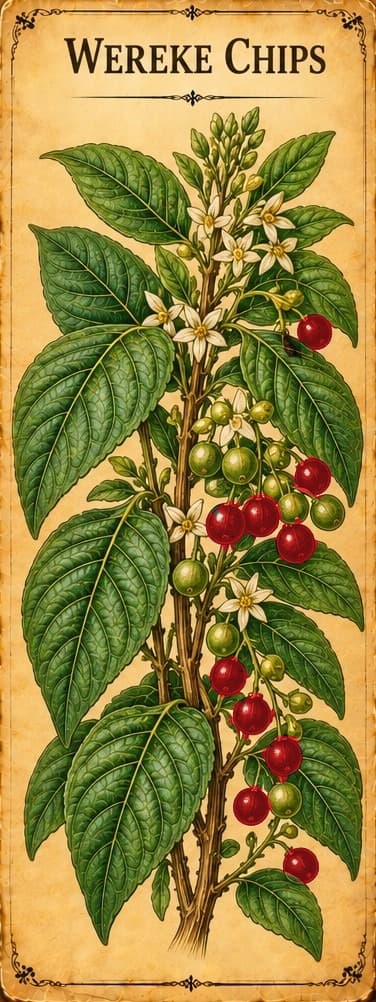
Wereke
Ibervillea sonorae
The root of a wild gourd from northwestern Mexico, sold as dried "chips" and boiled into a tea for diabetes in Mexican folk medicine. Lab and animal studies suggest it may lower blood sugar, but it hasn't been tested in people.
Safety at a glance
- Pregnancy1 note →
- BreastfeedingNothing recorded
- Medicines1 note →
- Who should avoid itNothing recorded
- AllergiesNothing recorded
- ToxicityNothing recorded
Tap a box to read the safety notes below. “Nothing recorded” means our sources don't cover it, not that it's safe.
Wereke may interact with some medicines. If you take any medicine, read Interactions with medicines below and talk to your doctor or pharmacist before using it.
What is Wereke?
- Plant family
- Cucurbitaceae, the gourd and cucumber family
- Parts used
- The large root, sliced and dried (sold as "chips") and boiled as a tea; also sold as capsules and liquid extracts
- Where it grows
- Northwestern Mexico
- Genus
- Ibervillea
- Species
- sonorae
Also called
Wereke Chips, Wekeke Chips
Regional names
Guareque, Wareki, Choyalhuani
Traditionally used for
- Diabetes (traditional)
- Skin disinfectant (traditional)
Traditionally described as
- May lower blood sugar (in animal studies)
Health topics
Where Wereke appears in symptom search, and why. Being listed doesn't mean it's a proven treatment.
- High Blood Sugar
Traditionally used in Mexico for diabetes. Lab and animal studies suggest it may lower blood sugar, but it hasn't been tested in people. Don't combine it with diabetes medicines.
How it's prepared
Common ways Wereke is prepared or sold. This isn't advice on how to take it; see Safety below.
- Decoction
Slices of dried root are boiled in water and the tea is drunk.[1]General reference
Safety
Interactions with medicines
Don't combine wereke with medicines that lower blood sugar. No studies have looked at its safety in people or how it affects medicines.[1]General reference
Pregnancy
Avoid wereke during pregnancy and breastfeeding.[1]General reference
What does the research say?
Traditional use
These are traditional uses, not proven treatments.
Wereke is a root used in Mexican folk medicine, mainly for diabetes. Slices of dried root are boiled in water and the tea is drunk. It's also put on the skin as a disinfectant.[1]General reference
The Mayo people of northwestern Mexico use wereke to treat diabetes and cancer.[2]Study
Laboratory & animal research
Lab and animal results show what might be worth studying in people. They don't show that the herb has these effects in humans.
A 2026 review found 8 lab and animal studies. Wereke preparations may help control blood sugar, possibly by helping cells take up sugar and by slowing the digestion of starches. Most studies used crude extracts and had limitations, and there are no studies in people.[3]Review or trial
Technical detail: proposed mechanisms include PI3K/AKT/GLUT4 signalling and inhibition of α-glucosidase and α-amylase; cucurbitacin-derived compounds (kinoins) may be involved.
In lab tests, wereke preparations and cucurbitacin IIb, a compound from the root, killed cervical cancer cells.[2]Study
Research in people
No clinical trials have tested whether wereke works for diabetes or any other condition, and its active compounds haven't been identified.[1]General reference
In short
Don't combine it with diabetes medicines; avoid during pregnancy and breastfeeding.
Sources
- [1] Wereke (Ibervillea sonorae): Herbal Facts Sheet — University of Texas at El Paso, Herbal SafetyGeneral reference
- [2] Standardized phytopreparations and cucurbitacin IIb from Ibervillea sonorae (S. Watson) Greene induce apoptosis in cervical cancer cells by Nrf2 inhibition · DOI: 10.1016/j.jep.2022.115606Peer-reviewed study
- [3] Antihyperglycemic Effects and Molecular Mechanisms of Ibervillea sonorae (S. Watson) Greene: A Systematic Review of Preclinical Evidence · DOI: 10.3390/plants15172710Review or clinical trial
This information is educational and traditional in nature, and is not a substitute for professional medical advice. Unfamiliar word? See what these words mean.