
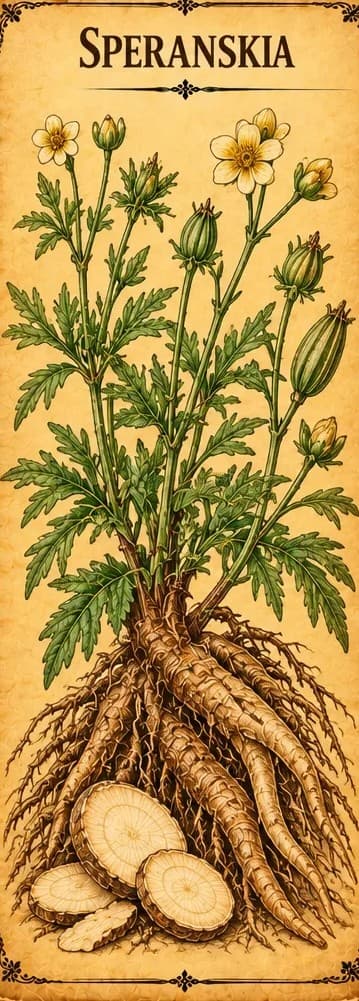
Speranskia
Speranskia tuberculata
A Chinese medicinal herb used to "dispel wind and dampness", promote circulation and relieve pain. Very little research has been published on it.
Safety at a glance
- PregnancyNothing recorded
- BreastfeedingNothing recorded
- MedicinesNothing recorded
- Who should avoid itNothing recorded
- AllergiesNothing recorded
- ToxicityNothing recorded
Tap a box to read the safety notes below. “Nothing recorded” means our sources don't cover it, not that it's safe.
What is Speranskia?
- Plant family
- Euphorbiaceae, the spurge family
- Parts used
- The dried herb
- Genus
- Speranskia
- Species
- tuberculata
Also called
Speranskia tuberculata
Traditionally used for
- Aches and pain (traditional)
- Circulation (traditional)
Traditionally described as
Health topics
Where Speranskia appears in symptom search, and why. Being listed doesn't mean it's a proven treatment.
- Joint Discomfort
Traditionally used in Chinese medicine for "wind-damp" aches and pain. Not tested in trials.
Traditions that use it
- Traditional Chinese Medicine
Used to "dispel wind and dampness", promote blood circulation and relieve pain.
What does the research say?
Traditional use
These are traditional uses, not proven treatments.
Speranskia is a perennial herb used in traditional Chinese medicine to "dispel wind and dampness", promote blood circulation and relieve pain. Very little research on it has been published in English: a 2026 study notes that its quality markers and how it might work haven't been worked out.[1]Study
Laboratory & animal research
Lab and animal results show what might be worth studying in people. They don't show that the herb has these effects in humans.
Chemical analysis found plant compounds including chlorogenic acid, kaempferol, diosmetin and amentoflavone. This was a quality-control study and doesn't show any health effect.[1]Study
Sources
- [1] Comprehensive Analysis of Quality Markers in Speranskia tuberculata based on HPLC Fingerprinting, Chemometrics, and Network Pharmacology · DOI: 10.1093/jaoacint/qsag043Peer-reviewed study
This information is educational and traditional in nature, and is not a substitute for professional medical advice. Unfamiliar word? See what these words mean.