
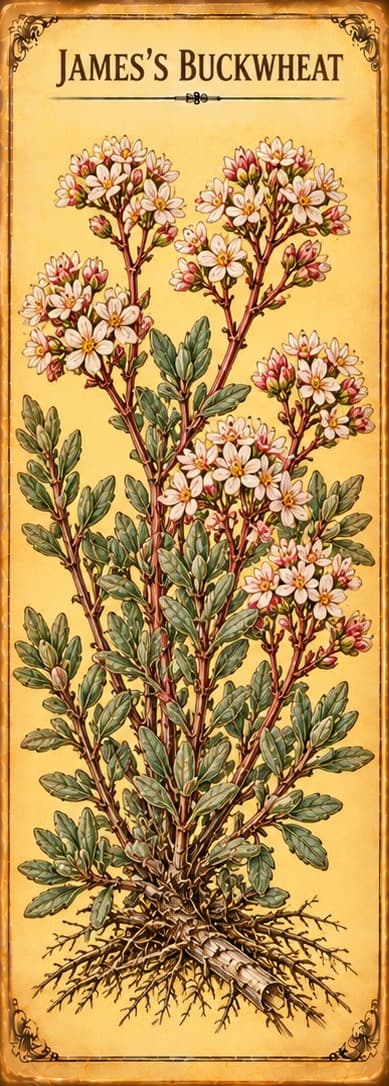
James's Buckwheat
Eriogonum jamesii
A southwestern buckwheat whose root the Zuni ate for stomachaches and the Navajo used to ease labor pains.
Safety at a glance
- PregnancyNothing recorded
- BreastfeedingNothing recorded
- MedicinesNothing recorded
- Who should avoid itNothing recorded
- AllergiesNothing recorded
- ToxicityNothing recorded
Tap a box to read the safety notes below. “Nothing recorded” means our sources don't cover it, not that it's safe.
What is James's Buckwheat?
- Plant family
- Polygonaceae, the buckwheat and dock family
- Parts used
- The root and whole plant
- Where it grows
- The southwestern United States
- Genus
- Eriogonum
- Species
- jamesii
Traditionally used for
- Stomachache
- Labor pain (traditional)
Traditionally described as
- Medicinal root
Traditions that use it
- Native American Ethnobotany
Used by the Zuni, Navajo, Apache and Western Keres.
What does the research say?
Traditional use
These are traditional uses, not proven treatments.
The Zuni ate the root for stomachaches and used it as a wash for sore eyes. The Ramah Navajo drank a tea of the plant to ease labor pains and used the root as a 'life medicine'. The Western Keres chewed the roots as a heart medicine and used a root tea for low spirits.[1]Traditional text
In short
No lab, human or safety studies were found.
Sources
- [1] Native American Ethnobotany Database: Eriogonum jamesii — Botanical Research Institute of Texas (BRIT); compiled by Daniel E. MoermanTraditional text
This information is educational and traditional in nature, and is not a substitute for professional medical advice. Unfamiliar word? See what these words mean.