
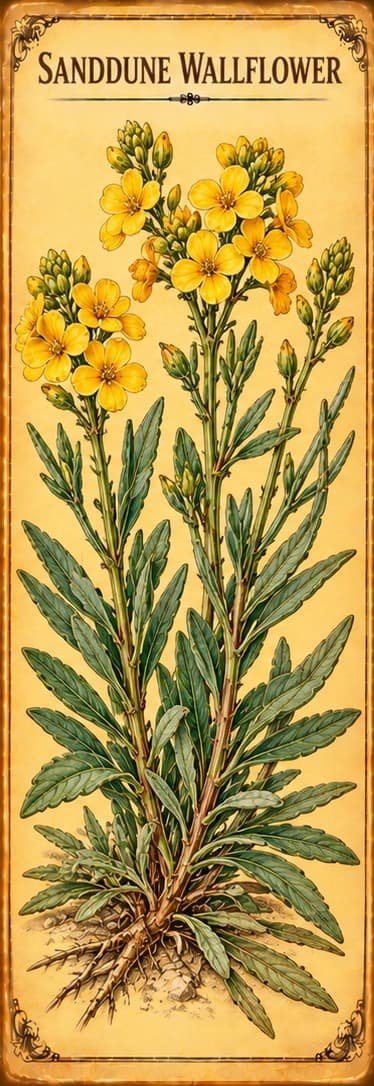
Sanddune Wallflower
Erysimum capitatum
A yellow-flowered western wallflower used by several peoples for muscle aches, headache, toothache and wounds.
Safety at a glance
- PregnancyNothing recorded
- BreastfeedingNothing recorded
- MedicinesNothing recorded
- Who should avoid itNothing recorded
- AllergiesNothing recorded
- ToxicityNothing recorded
Tap a box to read the safety notes below. “Nothing recorded” means our sources don't cover it, not that it's safe.
What is Sanddune Wallflower?
- Plant family
- Brassicaceae, the mustard and cabbage family
- Parts used
- The whole plant, leaves, seeds and root
- Where it grows
- Western North America
- Genus
- Erysimum
- Species
- capitatum
Also called
Western Wallflower
Traditionally used for
- Muscle aches
- Headache
- Toothache
- Wounds (traditional)
Traditionally described as
- Mustard-family plant
Traditions that use it
- Native American Ethnobotany
Used by the Zuni, Navajo, Hopi, Okanagan-Colville and Teton Sioux.
What does the research say?
Traditional use
These are traditional uses, not proven treatments.
The Zuni used a tea of the plant for muscle aches, and the Western Keres put chewed leaves on swellings. The Ramah Navajo sniffed the crushed leaves for headache, snuffed the pods for a congested nose and put the warmed root on toothache. The Okanagan-Colville put the pounded plant on fresh wounds, and the Teton Sioux used the seeds for stomach and bowel cramps.[1]Traditional text
In short
No lab, human or safety studies were found.
Sources
- [1] Native American Ethnobotany Database: Erysimum capitatum — Botanical Research Institute of Texas (BRIT); compiled by Daniel E. MoermanTraditional text
This information is educational and traditional in nature, and is not a substitute for professional medical advice. Unfamiliar word? See what these words mean.