
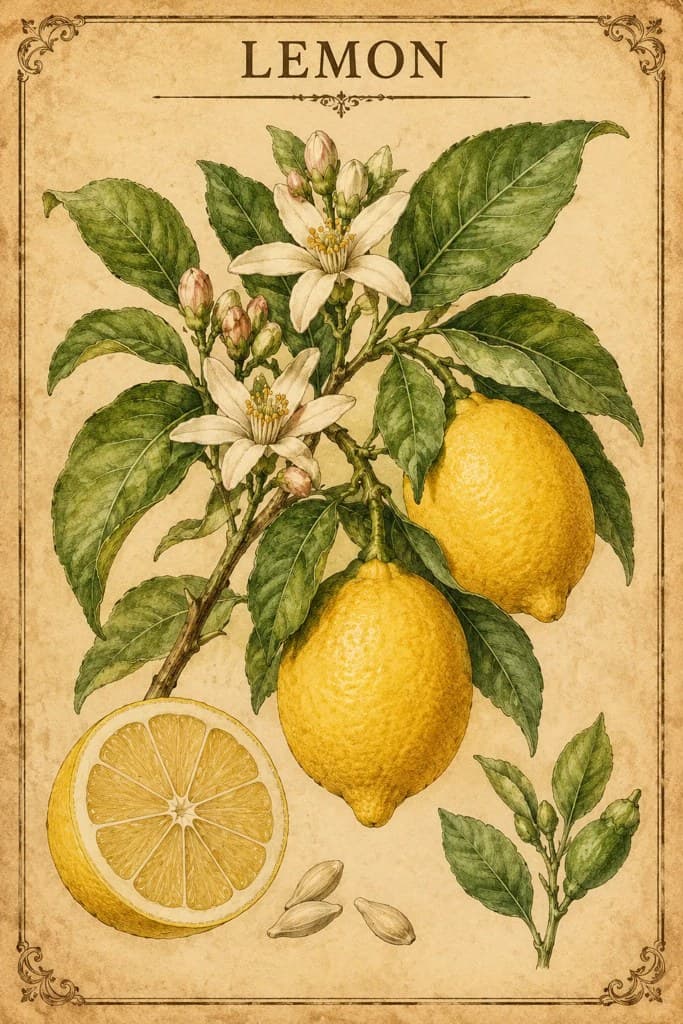
Lemon
Citrus limon
The familiar sour citrus fruit, once used to treat scurvy and long used for colds and sore throats. Lemonade raises urine citrate, which helps prevent some kidney stones.
Safety at a glance
- PregnancyNothing recorded
- BreastfeedingNothing recorded
- MedicinesNothing recorded
- Who should avoid itNothing recorded
- AllergiesNothing recorded
- ToxicityNothing recorded
Tap a box to read the safety notes below. “Nothing recorded” means our sources don't cover it, not that it's safe.
What is Lemon?
- Plant family
- Rutaceae, the citrus family
- Parts used
- The fruit juice, peel and essential oil
- Where it grows
- Asia; now grown in warm regions worldwide
- Genus
- Citrus
- Species
- limon
Traditionally used for
- Food
- Colds
- Sore throat (traditional)
- Kidney stone prevention
Traditionally described as
- Rich in vitamin C
Traditions that use it
- Mediterranean Folk Medicine
Lemon juice used for scurvy, colds, sore throats, fever and rheumatism.
Natural compounds
Safety
Depends on how it's prepared
Lemon peel and lemon essential oil contain furanocoumarins, which can make skin burn more easily in sunlight. The limonene in the oil can also irritate the skin or cause allergic reactions.[1]Study
What does the research say?
Traditional use
These are traditional uses, not proven treatments.
Lemon juice was used to treat scurvy before vitamin C was discovered. In traditional medicine it's also used for colds, sore throats, fever, rheumatism, high blood pressure, chest pain and irregular periods.[1]Study
Laboratory & animal research
Lab and animal results show what might be worth studying in people. They don't show that the herb has these effects in humans.
Lemon is rich in vitamin C and flavonoids such as hesperidin, and its oil is rich in limonene. Lab studies found its extracts and oil fought microbes, calmed inflammation and slowed cancer cells.[1]Study
Research in people
Lemonade raises citrate in the urine, which helps prevent calcium kidney stones. In small studies of people who form stones, the effect was weaker and less consistent than with the prescription medicine potassium citrate.[2]Review or trial
In short
Lemon peel and oil can make skin burn more easily in sunlight.
Sources
- [1] Citrus limon (Lemon) Phenomenon-A Review of the Chemistry, Pharmacological Properties, Applications in the Modern Pharmaceutical, Food, and Cosmetics Industries, and Biotechnological Studies · DOI: 10.3390/plants9010119Peer-reviewed study
- [2] Systematic review of pharmacological, complementary, and alternative therapies for the prevention of calcium oxalate stones · DOI: 10.1016/j.ajur.2024.04.006Review or clinical trial
This information is educational and traditional in nature, and is not a substitute for professional medical advice. Unfamiliar word? See what these words mean.