
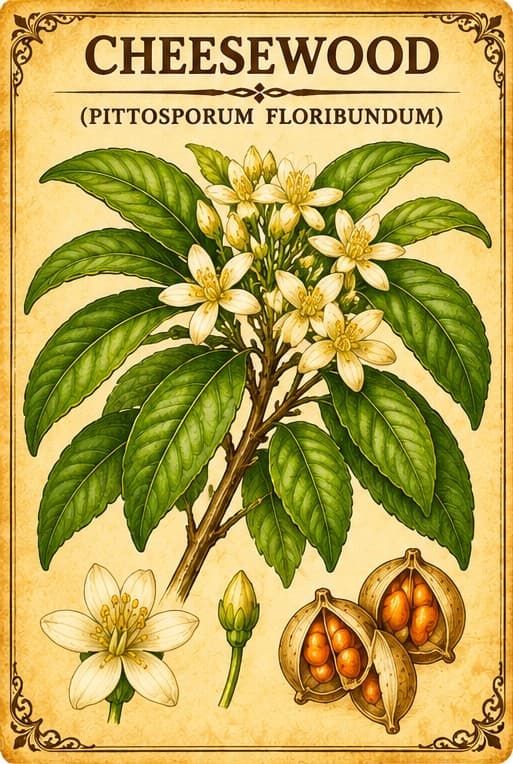
Cheesewood
Pittosporum napaulense
A Himalayan evergreen tree whose bark paste is put on injuries and broken bones in Nepal. Its bark stopped drug-resistant bacteria in a lab study.
Safety at a glance
- PregnancyNothing recorded
- BreastfeedingNothing recorded
- MedicinesNothing recorded
- Who should avoid itNothing recorded
- AllergiesNothing recorded
- ToxicityNothing recorded
Tap a box to read the safety notes below. “Nothing recorded” means our sources don't cover it, not that it's safe.
What is Cheesewood?
- Plant family
- Pittosporaceae, the cheesewood family
- Parts used
- The bark
- Where it grows
- The Himalayas, India and Southeast Asia
- Genus
- Pittosporum
- Species
- napaulense
Regional names
Khorsnai, Pipalu
Older scientific names
Pittosporum floribundum
Traditionally used for
- Injuries
- Broken bones
- Pain (traditional)
Traditionally described as
- Bark contains saponins
Health topics
Where Cheesewood appears in symptom search, and why. Being listed doesn't mean it's a proven treatment.
- Sprains and Bruises
A bark paste is put on injuries and broken bones in Nepal. Not studied in people.
What does the research say?
Traditional use
These are traditional uses, not proven treatments.
Laboratory & animal research
Lab and animal results show what might be worth studying in people. They don't show that the herb has these effects in humans.
In lab tests, a bark extract stopped the growth of drug-resistant Staphylococcus aureus and Shigella bacteria, and broke up the slimy films they form. It also neutralized free radicals.[3]Study
In short
No human or safety studies were found.
Sources
- [1] Ethnomedicinal plants in Champadevi rural municipality, Okhaldhunga district, Nepal · DOI: 10.1186/s13002-023-00627-yPeer-reviewed study
- [2] Seasonal variations in the nutritive value of fifteen multipurpose fodder tree species: A case study of north-western Himalayan mid-hills · DOI: 10.1371/journal.pone.0276689Peer-reviewed study
- [3] Antioxidant, antibacterial and antibiofilm activities of Pittosporum napaulense (DC.) against drug-resistant Staphylococcus aureus and Shigella sp. · DOI: 10.1080/14786419.2024.2410422Peer-reviewed study
This information is educational and traditional in nature, and is not a substitute for professional medical advice. Unfamiliar word? See what these words mean.