
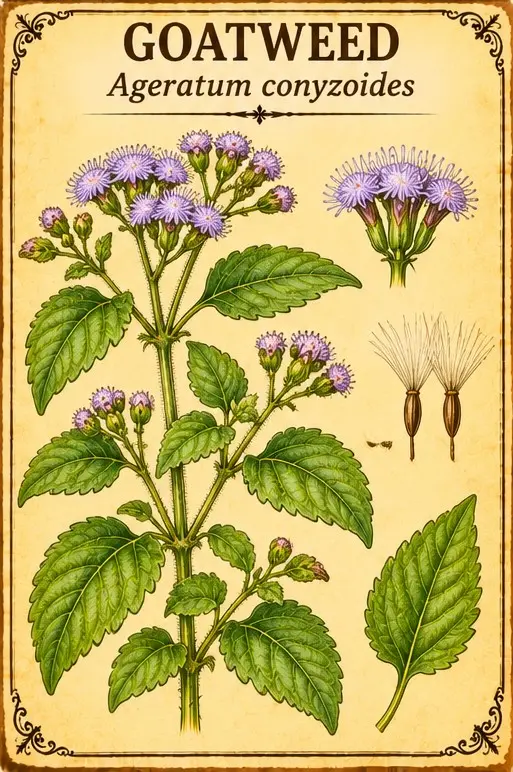
Goatweed
Ageratum conyzoides
A goat-scented tropical weed widely used on wounds and burns and for fever and diarrhea. It contains pyrrolizidine alkaloids, which can damage the liver.
Safety at a glance
- PregnancyNothing recorded
- BreastfeedingNothing recorded
- MedicinesNothing recorded
- Who should avoid itNothing recorded
- AllergiesNothing recorded
- Toxicity1 note →
Tap a box to read the safety notes below. “Nothing recorded” means our sources don't cover it, not that it's safe.
What is Goatweed?
- Plant family
- Asteraceae, the daisy family
- Parts used
- The leaves and whole plant
- Where it grows
- Tropical America; now a weed throughout the tropics
- Genus
- Ageratum
- Species
- conyzoides
Also called
Goat Weed
Regional names
Bandotan
Traditionally used for
- Wounds
- Burns
- Fever
- Diarrhea (traditional)
Traditionally described as
- Contains pyrrolizidine alkaloids
- chromenes and flavonoids
Health topics
Where Goatweed appears in symptom search, and why. Being listed doesn't mean it's a proven treatment.
- Cuts, Wounds, Burns and Skin Ulcers
A traditional wound and burn remedy. Contains liver-damaging alkaloids.
Safety
Toxicity testing
It contains pyrrolizidine alkaloids, compounds that can damage the liver. They were found in the plant and in honey made by bees that fed on it.[1]Study
What does the research say?
Traditional use
These are traditional uses, not proven treatments.
A tropical weed named for its goat-like smell. It's long been used on wounds and burns, and for headache, joint pain and breathing trouble.[2]Study
In Africa it's used for constipation, fever, ulcers and as a wound dressing; in Togo for measles and snakebite; and in Nigeria for skin diseases, wounds and diarrhea.[2]Study
It's also used for leprosy, skin disorders, sleeping sickness, rheumatism, toothache and pneumonia.[3]Study
Laboratory & animal research
Lab and animal results show what might be worth studying in people. They don't show that the herb has these effects in humans.
Lab and animal studies suggest it may fight germs and reduce inflammation and pain.[3]Study
In short
Contains liver-damaging pyrrolizidine alkaloids.
Sources
- [1] Analysis of Pyrrolizidine Alkaloids in Stingless Bee Honey and Identification of a Botanical Source as Ageratum conyzoides · DOI: 10.3390/toxins16010040Peer-reviewed study
- [2] Medicinal Effect, In Silico Bioactivity Prediction, and Pharmaceutical Formulation of Ageratum conyzoides L.: A Review · DOI: 10.1155/2020/6420909Peer-reviewed study
- [3] Phytochemical constituents and ethnopharmacological properties of Ageratum conyzoides L. · DOI: 10.1002/ptr.6405Peer-reviewed study
This information is educational and traditional in nature, and is not a substitute for professional medical advice. Unfamiliar word? See what these words mean.