
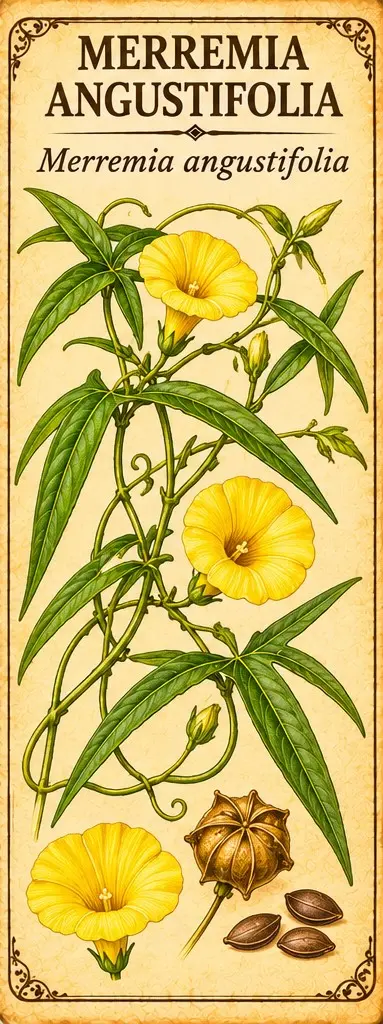
Merremia Angustifolia
Xenostegia tridentata
A small climbing vine that Aboriginal people in Queensland use on sores, wounds and cuts. An extract reduced allergic reactions in mice.
Safety at a glance
- PregnancyNothing recorded
- BreastfeedingNothing recorded
- MedicinesNothing recorded
- Who should avoid itNothing recorded
- AllergiesNothing recorded
- ToxicityNothing recorded
Tap a box to read the safety notes below. “Nothing recorded” means our sources don't cover it, not that it's safe.
What is Merremia Angustifolia?
- Plant family
- Convolvulaceae, the morning glory family
- Parts used
- The whole plant
- Where it grows
- Tropical Africa, Asia and Australia
- Genus
- Xenostegia
- Species
- tridentata
Older scientific names
Xenostegia tridentata, Merremia angustifolia
Traditionally used for
- Sores
- Wounds
- Cuts (traditional)
Traditionally described as
- Contains flavonoids
- caffeoylquinic acids and lutein
Health topics
Where Merremia Angustifolia appears in symptom search, and why. Being listed doesn't mean it's a proven treatment.
- Cancer Research
Lab studies only: lutein from the plant killed lung cancer cells and slowed their spread. Not tested against cancer in people.
- Cuts, Wounds, Burns and Skin Ulcers
A Queensland Aboriginal remedy for sores, wounds and cuts. Not studied in people.
Safety
Depends on how it's prepared
No human medical or safety studies were found.[1]Study
What does the research say?
Traditional use
These are traditional uses, not proven treatments.
Aboriginal people in Queensland use the whole plant, a climbing vine, on sores, skin lesions, wounds and cuts.[1]Study
Laboratory & animal research
Lab and animal results show what might be worth studying in people. They don't show that the herb has these effects in humans.
In short
No human medical or safety studies were found.
Sources
- [1] Aboriginal medicinal plants of Queensland: ethnopharmacological uses, species diversity, and biodiscovery pathways · DOI: 10.1186/s13002-022-00552-6Peer-reviewed study
- [2] LC-MS/MS metabolomics-facilitated identification of the active compounds responsible for anti-allergic activity of the ethanol extract of Xenostegia tridentata · DOI: 10.1371/journal.pone.0265505Peer-reviewed study
- [3] Lutein derived from Xenostegia tridentata exhibits anticancer activities against A549 lung cancer cells via hyaluronidase inhibition · DOI: 10.1371/journal.pone.0315570Peer-reviewed study
This information is educational and traditional in nature, and is not a substitute for professional medical advice. Unfamiliar word? See what these words mean.