
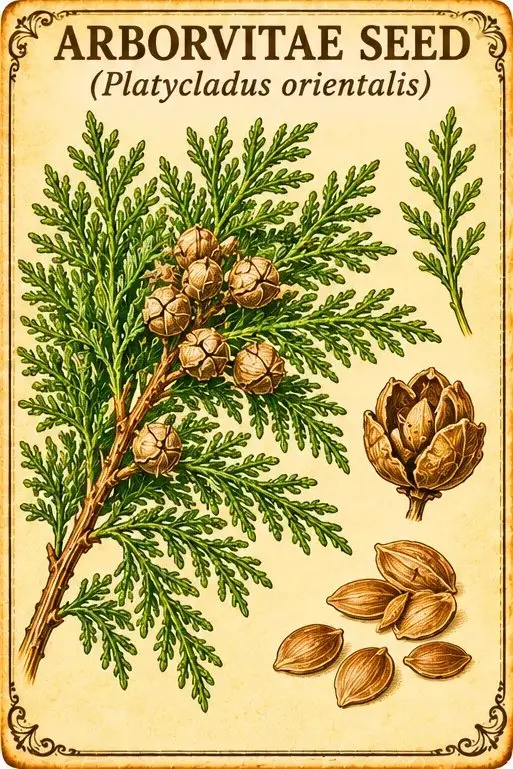
Arborvitae Seed
Platycladus orientalis
Seeds of the Chinese arborvitae, a traditional calming tonic. Animal studies suggest benefits for memory and mood.
Safety at a glance
- PregnancyNothing recorded
- BreastfeedingNothing recorded
- MedicinesNothing recorded
- Who should avoid itNothing recorded
- AllergiesNothing recorded
- ToxicityNothing recorded
Tap a box to read the safety notes below. “Nothing recorded” means our sources don't cover it, not that it's safe.
What is Arborvitae Seed?
- Plant family
- Cupressaceae, the cypress family
- Parts used
- The seeds
- Genus
- Platycladus
- Species
- orientalis
Also called
Platycladi Semen
Older scientific names
Biota orientalis
Traditionally used for
- Calming
- Memory
- Mood (traditional)
Traditionally described as
- Seed oils and fatty acids
Health topics
Where Arborvitae Seed appears in symptom search, and why. Being listed doesn't mean it's a proven treatment.
- Memory and Thinking
Reduced memory problems in Alzheimer's-model mice; not tested in people.
- Sleep Problems (Insomnia)
Traditionally used as a calming remedy; increased rest in zebrafish. Not tested in people.
Traditions that use it
- Traditional Chinese Medicine
Used as a tonic and calming remedy, to sharpen the mind and slow aging.
What does the research say?
Traditional use
These are traditional uses, not proven treatments.
Laboratory & animal research
Lab and animal results show what might be worth studying in people. They don't show that the herb has these effects in humans.
In mice bred to develop Alzheimer's-like disease, a seed extract reduced memory problems and the buildup of the protein clumps linked to the disease.[2]Study
In stressed rats, a seed extract reduced depression-like behavior and restored brain chemical messengers such as serotonin. In zebrafish it increased rest time.[3]Study
A seed extract made tiny worms (C. elegans) live longer and resist stress better.[1]Study
In short
No human safety data.
Sources
- [1] Lifespan extension by n-butanol extract from seed of Platycladus orientalis in Caenorhabditis elegans · DOI: 10.1016/j.jep.2013.03.019Peer-reviewed study
- [2] Modulation of the Aβ-Peptide-Aggregation Pathway by Active Compounds From Platycladus orientalis Seed Extract in Alzheimer's Disease Models · DOI: 10.3389/fnagi.2020.00207Peer-reviewed study
- [3] Platycladus orientalis seed extract as a potential triple reuptake MAO inhibitor rescue depression phenotype through restoring monoamine neurotransmitters · DOI: 10.1016/j.jep.2022.115302Peer-reviewed study
This information is educational and traditional in nature, and is not a substitute for professional medical advice. Unfamiliar word? See what these words mean.