
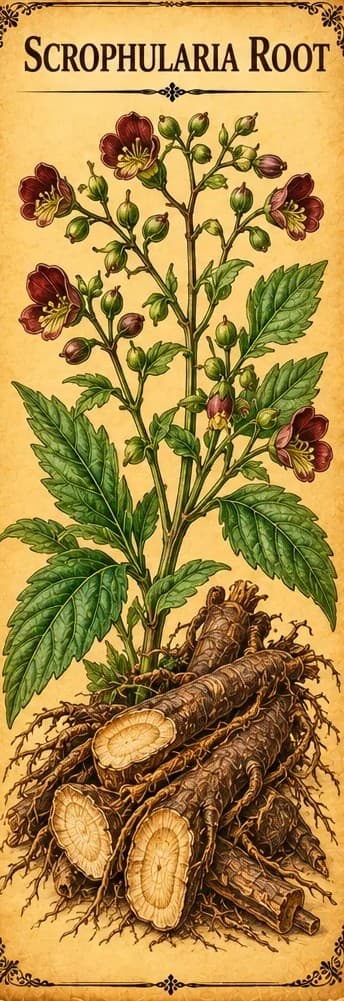
Scrophularia Root
Scrophularia ningpoensis
Xuan shen, a Chinese medicine root recorded in the Shennong Herbal Classic and used for sore throat, abscesses and constipation. Research is in the lab and in animals.
Safety at a glance
- PregnancyNothing recorded
- BreastfeedingNothing recorded
- MedicinesNothing recorded
- Who should avoid itNothing recorded
- AllergiesNothing recorded
- ToxicityNothing recorded
Tap a box to read the safety notes below. “Nothing recorded” means our sources don't cover it, not that it's safe.
What is Scrophularia Root?
- Plant family
- Scrophulariaceae, the figwort family
- Parts used
- The dried root
- Genus
- Scrophularia
- Species
- ningpoensis
Also called
Scrophulariae Radix, Ningpo Figwort
Traditional names
Xuan Shen, Xuanshen
Traditionally used for
- Sore throat (traditional)
- Abscesses (traditional)
- Constipation (traditional)
- Thyroid lumps (traditional)
Traditionally described as
Health topics
Where Scrophularia Root appears in symptom search, and why. Being listed doesn't mean it's a proven treatment.
- Constipation
Traditionally used for constipation. Not tested on its own in trials.
- Sore Throat
A traditional Chinese remedy for sore throat. Not tested on its own in trials.
Traditions that use it
- Traditional Chinese Medicine
Called xuan shen; recorded in the Shennong Herbal Classic and used to "clear heat", nourish yin and "remove toxins", for sore throat, abscesses and constipation.
How it's prepared
Common ways Scrophularia Root is prepared or sold. This isn't advice on how to take it; see Safety below.
- Tea / Infusion
It has been used in China for centuries as an herbal tea.[1]Study
What does the research say?
Traditional use
These are traditional uses, not proven treatments.
Xuan shen was first recorded in the Shennong Herbal Classic and is widely used in Chinese medicine to "clear heat", nourish yin and "remove toxins". For thousands of years it has been used for:
- Sore throat
- Abscesses and boils
- Constipation
It's also believed to dissolve lumps, which is why it's used for thyroid conditions.[2]Study
Laboratory & animal research
Lab and animal results show what might be worth studying in people. They don't show that the herb has these effects in humans.
In lab and animal research, its compounds (iridoids, phenylpropanoids and organic acids) may help reduce inflammation, act as antioxidants and affect the immune system, with possible effects on thyroid disease and diabetes. These haven't been confirmed in trials.[2]Study
Sources
- [1] Effects of Scrophularia ningpoensis Hemsl. on inhibition of proliferation, apoptosis induction and NF-κB signaling of immortalized and cancer cell lines · DOI: 10.3390/ph5020189Peer-reviewed study
- [2] The mechanism and application of Scrophulariae Radix in the treatment of endocrine disorders: focusing on thyroid diseases and diabetes mellitus · DOI: 10.3389/fendo.2025.1684744Peer-reviewed study
This information is educational and traditional in nature, and is not a substitute for professional medical advice. Unfamiliar word? See what these words mean.