
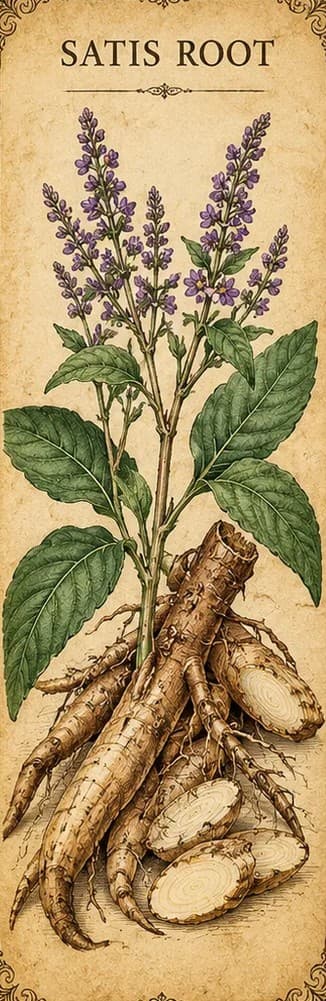
Isatis Root
Isatis indigotica
Ban lan gen, a Chinese medicine root used for centuries for flu and viral infections, fever, cough and sore throat. Its compounds acted against viruses in lab studies.
Safety at a glance
- PregnancyNothing recorded
- BreastfeedingNothing recorded
- MedicinesNothing recorded
- Who should avoid itNothing recorded
- AllergiesNothing recorded
- ToxicityNothing recorded
Tap a box to read the safety notes below. “Nothing recorded” means our sources don't cover it, not that it's safe.
What is Isatis Root?
- Plant family
- Brassicaceae, the mustard and cabbage family
- Parts used
- The dried root (ban lan gen); the leaves are a separate medicine (da qing ye)
- Genus
- Isatis
- Species
- indigotica
Also called
Isatidis Radix, Radix Isatidis, Satis Root, Isatis
Traditional names
Ban Lan Gen, Banlangen
Traditionally used for
- Flu and viral infections (traditional)
- Fever (traditional)
- Sore throat and cough (traditional)
Traditionally described as
- Acted against viruses (in lab studies)
Health topics
Where Isatis Root appears in symptom search, and why. Being listed doesn't mean it's a proven treatment.
- Colds and Nasal Congestion
A traditional Chinese remedy for flu and viral infections; acted against flu viruses in lab studies. Not tested on its own in trials.
- Sore Throat
Traditionally used for sore throat and cough from "lung heat". Not tested on its own in trials.
Traditions that use it
- Traditional Chinese Medicine
Called ban lan gen; used for centuries to "clear toxins", for flu and other viral infections, fever, cough and sore throat.
What does the research say?
Traditional use
These are traditional uses, not proven treatments.
Ban lan gen has been used in Chinese medicine for centuries as both food and medicine. It's described as bitter and cool, and is used to "clear toxins". It's often used for:
- Flu and other viral infections
- Fever and dizziness
- Cough and sore throat from "lung heat"
At least 39 Chinese patent medicines contain it or the leaves of the same plant.[1]Study
Laboratory & animal research
Lab and animal results show what might be worth studying in people. They don't show that the herb has these effects in humans.
In lab and animal studies, its compounds acted against several viruses, including flu, respiratory syncytial virus (RSV) and herpes simplex, partly by affecting the immune system and inflammation. These are lab and animal results.[1]Study
Research in people
In a small 2009 trial in Taiwan, 20 people having radiation for head and neck cancer gargled and swallowed either an isatis root preparation or salt water. The isatis group had milder mouth sores, less loss of appetite and less trouble swallowing.[2]Study
Sources
- [1] Isatidis Radix and Isatidis Folium: A systematic review on ethnopharmacology, phytochemistry and pharmacology · DOI: 10.1016/j.jep.2021.114648Peer-reviewed study
- [2] Effect of extracts from indigowood root (Isatis indigotica Fort.) on immune responses in radiation-induced mucositis · DOI: 10.1089/acm.2008.0322Peer-reviewed study
This information is educational and traditional in nature, and is not a substitute for professional medical advice. Unfamiliar word? See what these words mean.