
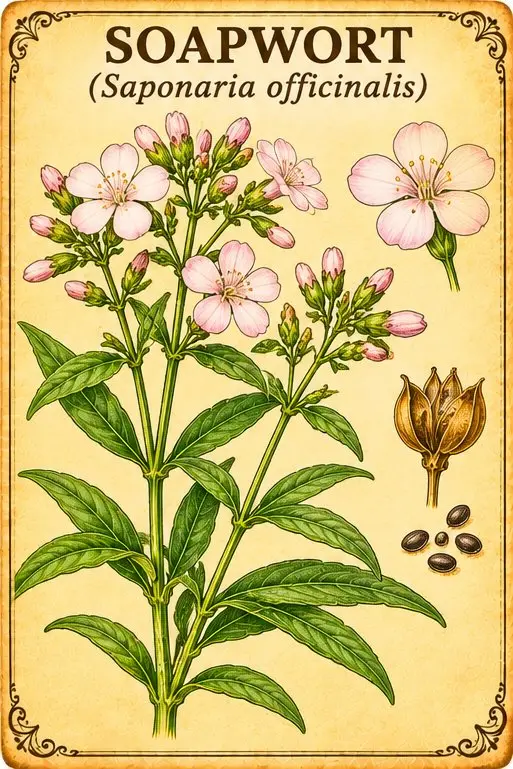
Soapwort
Saponaria officinalis
A plant that makes a soapy foam with water, used in Lithuanian folk practice to cleanse the skin.
Safety at a glance
- PregnancyNothing recorded
- BreastfeedingNothing recorded
- MedicinesNothing recorded
- Who should avoid itNothing recorded
- AllergiesNothing recorded
- ToxicityNothing recorded
Tap a box to read the safety notes below. “Nothing recorded” means our sources don't cover it, not that it's safe.
What is Soapwort?
- Plant family
- Caryophyllaceae, the pink and carnation family
- Parts used
- The above-ground parts and the root
- Genus
- Saponaria
- Species
- officinalis
Traditionally used for
- Skin cleansing
- Acne (in combinations)
Traditionally described as
- Saponin-rich
Health topics
Where Soapwort appears in symptom search, and why. Being listed doesn't mean it's a proven treatment.
- Acne
Only tested in combination with other plants; a cream containing soapwort reduced acne spots in one study.
- Cancer Research
Lab studies only: saponins from the root made an anticancer toxin work better. Not tested against cancer in people.
Traditions that use it
- European Folk Medicine
In Lithuania, the herb is rubbed with water to make a foam used to cleanse the skin.
What does the research say?
Traditional use
These are traditional uses, not proven treatments.
In a 2026 study in northern Lithuania, soapwort was the most popular plant for skin impurities, named by about half of the people asked. They rub the herb between their hands with water to make a cleansing foam.[1]Study
Laboratory & animal research
Lab and animal results show what might be worth studying in people. They don't show that the herb has these effects in humans.
In a 2026 lab study, saponins (soap-like compounds) from soapwort root made an anticancer toxin work better against cancer cells.[2]Study
Technical detail: saponin SO1406 enhanced saporin cytotoxicity.
Research in people
A 2026 review of acne remedies found soapwort has only been tested in combination with other plants. A cream made from soapwort, elecampane and black nightshade reduced acne spots in one study, so soapwort's own effect is unclear. Lab studies suggest it reduces oil production and inflammation and fights acne bacteria.[3]Study
In short
No safety data.
Sources
- [1] Medicinal Plants for Dermatological and Cosmetic Applications: Ethnobotanical Study from Northern Lithuania · DOI: 10.3390/plants15091389Peer-reviewed study
- [2] Improving Cytotoxicity of Saporin with Saponin SO1406 Isolated from the Roots of Saponaria Officinalis · DOI: 10.3390/biomedicines14030626Peer-reviewed study
- [3] Medicinal Plants for Acne Vulgaris: An Evidence-Based Review of Treatments Promoted by Social Media · DOI: 10.1111/jocd.70628Peer-reviewed study
This information is educational and traditional in nature, and is not a substitute for professional medical advice. Unfamiliar word? See what these words mean.