
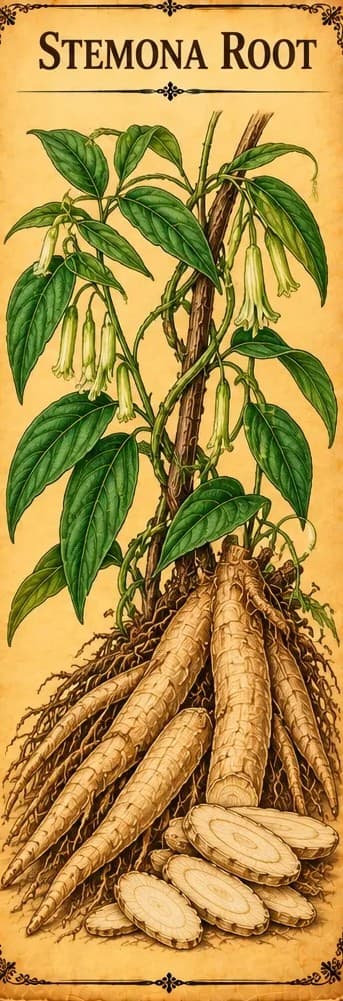
Stemona Root
Stemona species
Bai bu, the root of Stemona plants used across South and East Asia for cough and asthma, and to kill lice and other pests.
Safety at a glance
- PregnancyNothing recorded
- BreastfeedingNothing recorded
- MedicinesNothing recorded
- Who should avoid itNothing recorded
- AllergiesNothing recorded
- Toxicity1 note →
Tap a box to read the safety notes below. “Nothing recorded” means our sources don't cover it, not that it's safe.
What is Stemona Root?
- Plant family
- Stemonaceae, the stemona family
- Parts used
- The tuberous roots
- Genus
- Stemona
- Species
- several species
Also called
Stemonae Radix, Stemona
Traditional names
Bai Bu, Baibu
Traditionally used for
- Cough and phlegm (traditional)
- Asthma (traditional)
- Lice (traditional)
- Skin diseases (traditional)
Traditionally described as
- Killed insects (in lab studies)
Health topics
Where Stemona Root appears in symptom search, and why. Being listed doesn't mean it's a proven treatment.
- Cough
A traditional Asian remedy for cough and phlegm. Not tested in trials.
- Head Lice and Scabies
Traditionally used to kill lice and other pests; killed insects in lab studies. Not tested in people.
Traditions that use it
- Traditional Chinese Medicine
Called bai bu; used across South and East Asia to relieve cough and phlegm, for asthma, and to kill lice and other pests.
How it's prepared
Common ways Stemona Root is prepared or sold. This isn't advice on how to take it; see Safety below.
Safety
Toxicity testing
Its possible toxicity hasn't been properly studied; the reviewers say this is needed before clinical studies.[2]Study
What does the research say?
Traditional use
These are traditional uses, not proven treatments.
Stemona plants have long been used as medicine in many South and East Asian countries, to:
- Relieve cough and clear phlegm
- Prevent asthma
- Kill lice and other pests
- Reduce inflammation and pain
- Treat some skin diseases
Laboratory & animal research
Lab and animal results show what might be worth studying in people. They don't show that the herb has these effects in humans.
In lab and animal studies, Stemona extracts and their alkaloids killed and repelled insects, eased coughs, may help reduce inflammation, and showed activity against cancer cells, microbes and viruses. The reviewers say the research so far is insufficient.[2]Study
In short
Its toxicity hasn't been properly studied.
Sources
- [1] Baiheqingjin formula reduces inflammation in mice with asthma by inhibiting the PI3K/AKT/NF-κB signaling pathway · DOI: 10.1016/j.jep.2023.117565Peer-reviewed study
- [2] The traditional uses, phytochemistry, and pharmacology of Stemona species: A review · DOI: 10.1016/j.jep.2020.113112Peer-reviewed study
This information is educational and traditional in nature, and is not a substitute for professional medical advice. Unfamiliar word? See what these words mean.